



Dull skin: why the face loses its radiance
There are times when your skin shows no particular imperfections, yet in the mirror it looks dull, lacklustre and lacking in radiance. Your face seems less fresh and your skin reflects less light, even when there are no obvious problems.
The radiance of the skin does not simply depend on the use of ‘glow’ products: it is linked above all to the condition of the skin’s surface, its level of hydration and the regularity of the renewal of the stratum corneum.
Why does the skin look dull?
One of the most common causes is the build-up of surface cells.
The stratum corneum consists of cells that are gradually shed and replaced. When this process becomes less regular, the surface may appear duller and reflect light less evenly.
Dehydration can also play a part. When the stratum corneum contains little water, the surface tends to become rougher and less able to reflect light evenly.
Furthermore, as time goes by, skin renewal naturally tends to slow down, which is why a loss of radiance is common even in adult and mature skin.
Sun exposure, environmental stress and inappropriate skincare can also contribute to the face gradually losing its freshness and radiance.
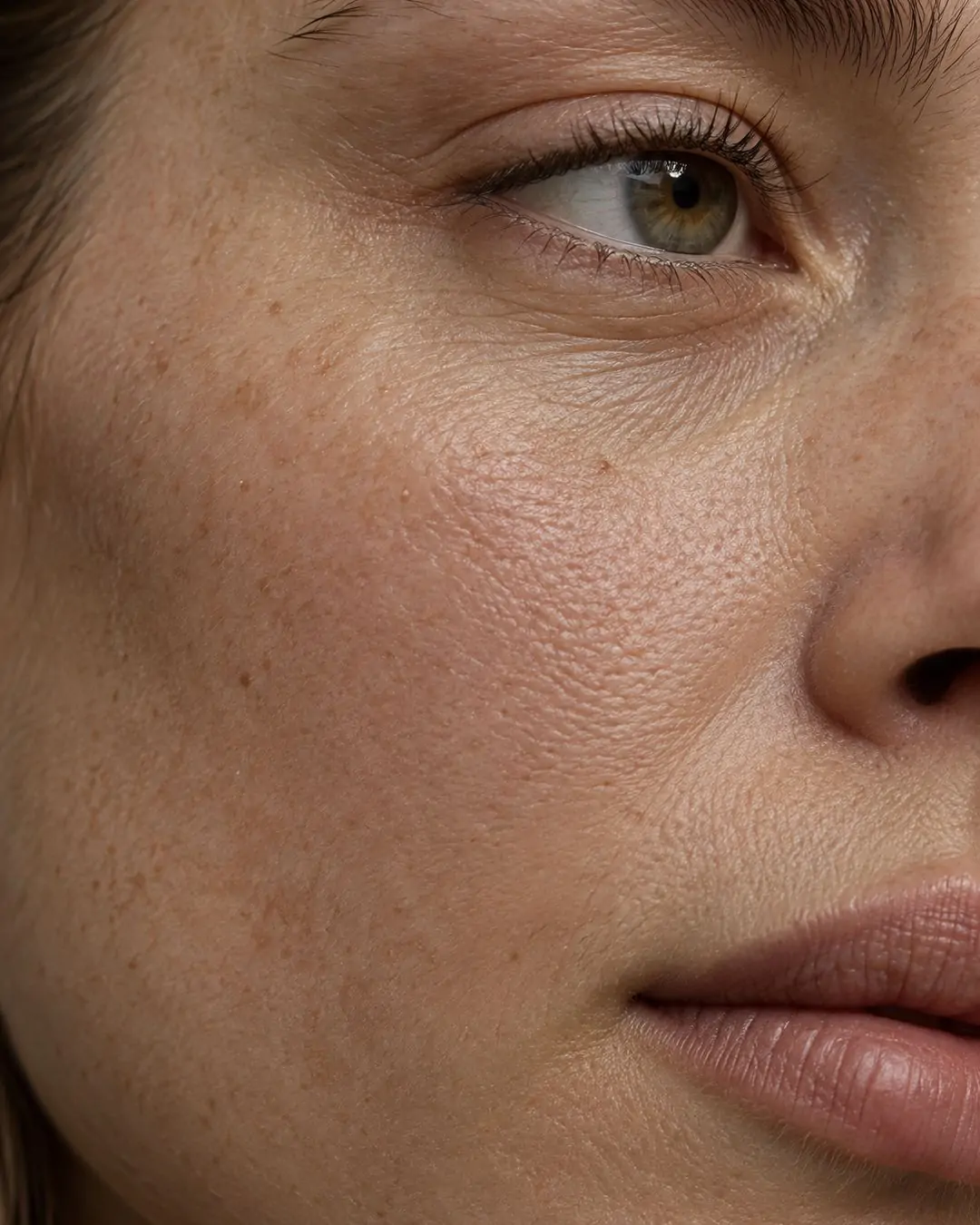

What determines the radiance of the skin?
Brightness depends largely on how light strikes the skin’s surface.
When the stratum corneum is smooth and sufficiently hydrated, light is reflected more evenly and the skin appears visibly more radiant.
On the contrary, a build-up of dead skin cells, dryness and an uneven skin surface cause light to scatter more, and can make the face look duller.
Brightness, however, does not mean glossy.
Oily skin can be glossy due to the presence of sebum and, at the same time, appear dull. The surface sheen caused by sebum does not, in fact, correspond to the radiance of balanced, even skin.
To restore radiance, it is therefore more effective to address the causes of dullness than simply to seek an immediate brightening effect.
Which skincare routine should you choose for a more radiant complexion?
La pelle può apparire spenta a qualsiasi età. Per questo la routine va modulata in base all’età, ma anche alle caratteristiche e alle esigenze della pelle.

Up to the age of 40–45
In younger skin, a loss of radiance is often linked to a build-up of surface cells, excess sebum, blackheads or minor imperfections.
In such cases, Glicosal may be helpful: a micro-peel containing glycolic acid and salicylic acid that promotes gradual exfoliation of the stratum corneum and helps to keep the skin’s surface smoother and more radiant.
Glicosal should be used every evening: consistency is key to achieving a gradual improvement in the appearance of your skin.
Twice a week, in the evening, you can also use the Micro-Pumice Facial Scrub to complement the micro-peel with controlled mechanical exfoliation and help achieve an even smoother and more radiant complexion. On evenings when you use Micro-Pomice, do not apply Glicosal.
After the age of 40–45
As time goes by, the skin’s natural renewal process tends to slow down, and the skin may appear duller, less smooth and less radiant.
In this case, the treatment programme can be geared towards a more thorough renewal of the skin’s surface.
In the evening, use the Night Renewal Cream, formulated with glycolic acid and salicylic acid to promote skin renewal and gradually improve the skin’s smoothness and radiance.
The formula also contains shea butter, hyaluronic acid, vitamin E and vitamin A, to complement the action of the acids with emollient and moisturising ingredients.
Twice a week, in the evening, you can use the Micro-Pumice Facial Scrub. The micronised pumice helps to remove surface cells, whilst succinic acid helps to promote more regular exfoliation.
The aim is to gradually achieve a smoother, more even surface that reflects light more effectively.

Se la pelle è soprattutto disidratata
As time goes by, the skin’s natural renewal process tends to slow down, and the skin may appear duller, less smooth and less radiant.
In this case, the treatment programme can be geared towards a more thorough renewal of the skin’s surface.
In the evening, use the Night Renewal Cream, formulated with glycolic acid and salicylic acid to promote skin renewal and gradually improve the skin’s smoothness and radiance.
At any age, skin that is lacking in moisture can look duller.
In this case, constantly increasing the frequency of exfoliation and the use of acids is not necessarily beneficial. A skincare routine that is too harsh can lead to dryness, redness and flaking, thereby accentuating the very dull appearance you are trying to correct.
It is therefore important to maintain a balanced routine and help keep the skin’s surface moisturised.
In the morning, MOST Skincare recommends Essenziale, a moisturising face cream formulated with shea butter and polyglycerols, to help keep the skin soft and comfortable.
How long does it take for the screen to regain its brightness?
Your skin doesn’t change overnight.
An improvement resulting from the renewal of the stratum corneum and the smoothing of the skin’s surface takes time and consistency.
Frequently changing products or increasing the concentration of active ingredients in the hope of achieving immediate results can, on the other hand, subject the skin to unnecessary stress.
A radiant complexion should therefore be seen as the gradual result of a smoother, sufficiently moisturised and well-balanced skin surface.
A radiant complexion starts with balanced skin
Glowing skin isn’t the same as perfectly smooth skin.
Genuine leather retains its pores, texture, fine lines and natural surface variations. What changes is its overall appearance: it looks fresher, less dull and reflects light better.
That’s why you don’t necessarily need to add a product that promises a ‘glow’ effect.
It is more helpful to understand why your skin looks dull, choose the right level of exfoliation, maintain good hydration and avoid overloading your skincare routine.
Once the skin’s surface regains its smoothness and balance, a more radiant complexion naturally follows.