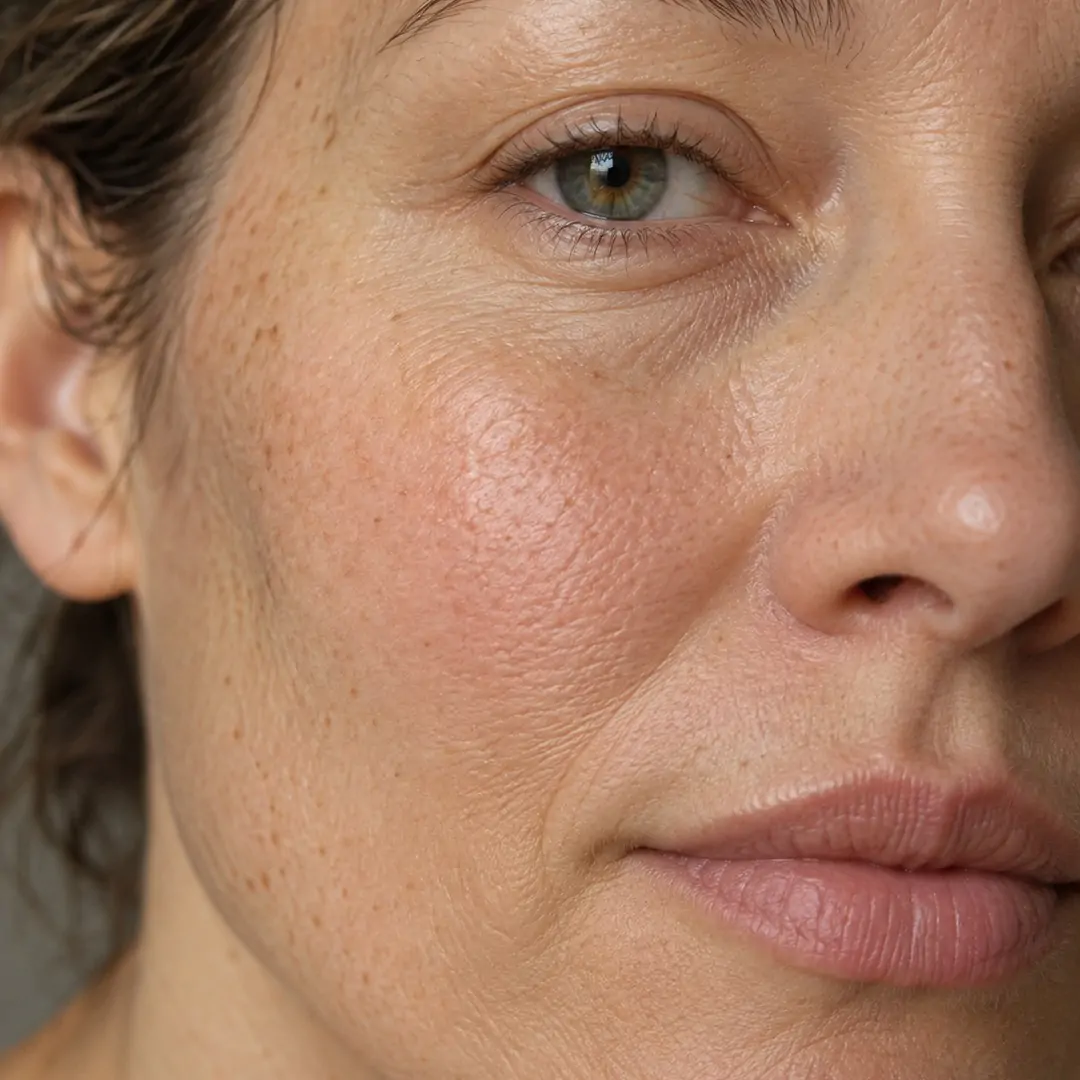
Uneven skin texture on the face: why your skin isn’t smooth and what to do about it
Visible pores, slight bumps, rough patches or a surface that appears uneven in the light: the term ‘uneven skin texture’ is commonly used to describe skin that, to the touch or to the eye, appears less smooth and even.
But there is one point that needs to be clarified straight away: real skin always has texture. Pores, follicles, fine lines and slight variations in the surface are all part of the skin’s normal structure.
The aim of skincare is therefore not to achieve perfectly smooth skin, but to recognise when the skin’s surface becomes more uneven than usual and to understand why.
What causes the uneven texture?
One of the most common causes is uneven renewal of the stratum corneum. When surface cells tend to build up, the skin may appear thicker, duller and rougher.
In other cases, the uneven texture is caused by comedones, blackheads, whiteheads or micro-imperfections. Sebum and dead skin cells can, in fact, build up inside the follicles and create small bumps that are visible or noticeable to the touch.
Even dry or dehydrated skin can have a rougher texture, as changes to the stratum corneum make the surface less even.
That is why an uneven skin texture does not always require the same treatment: before exfoliating, it is important to understand what is causing the unevenness.
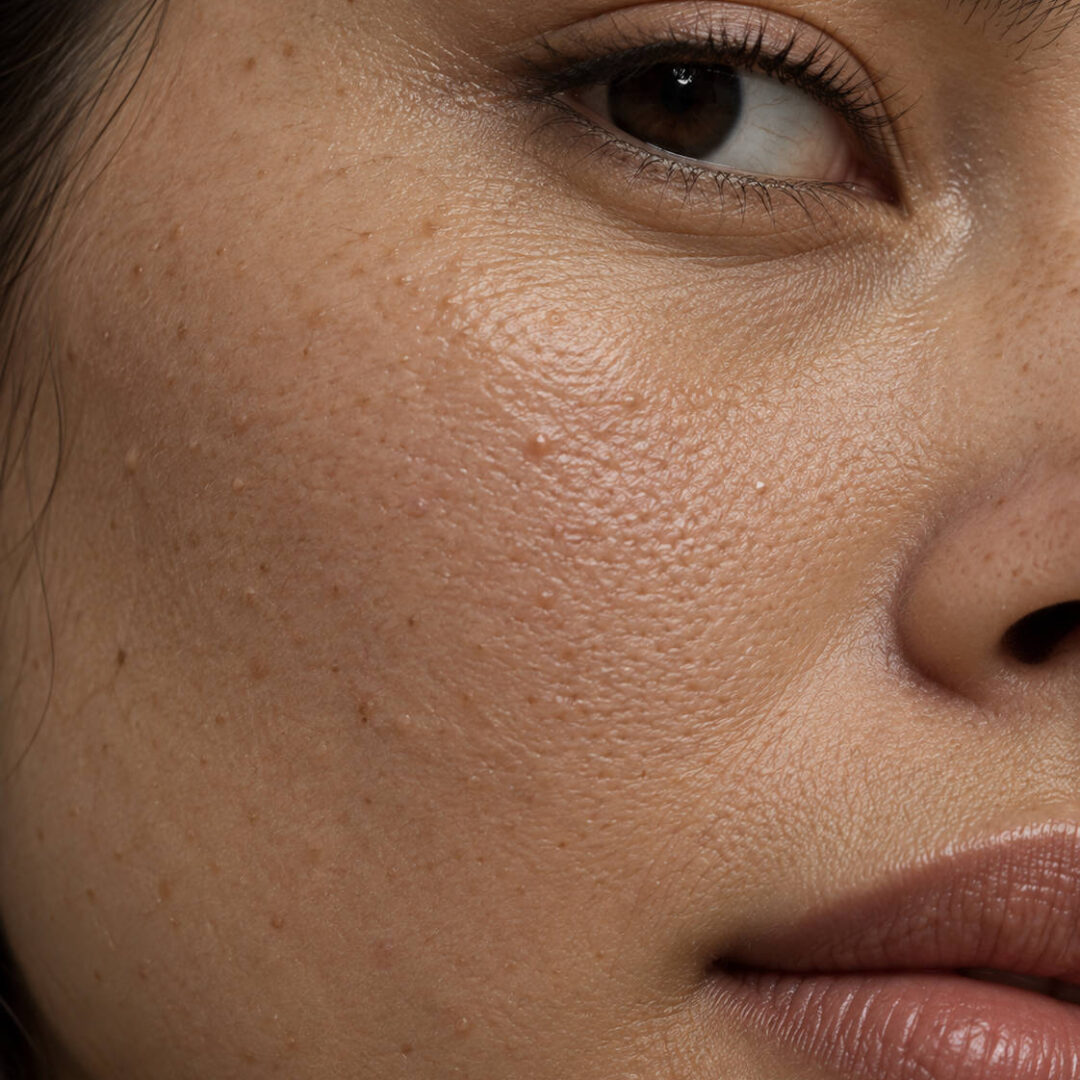
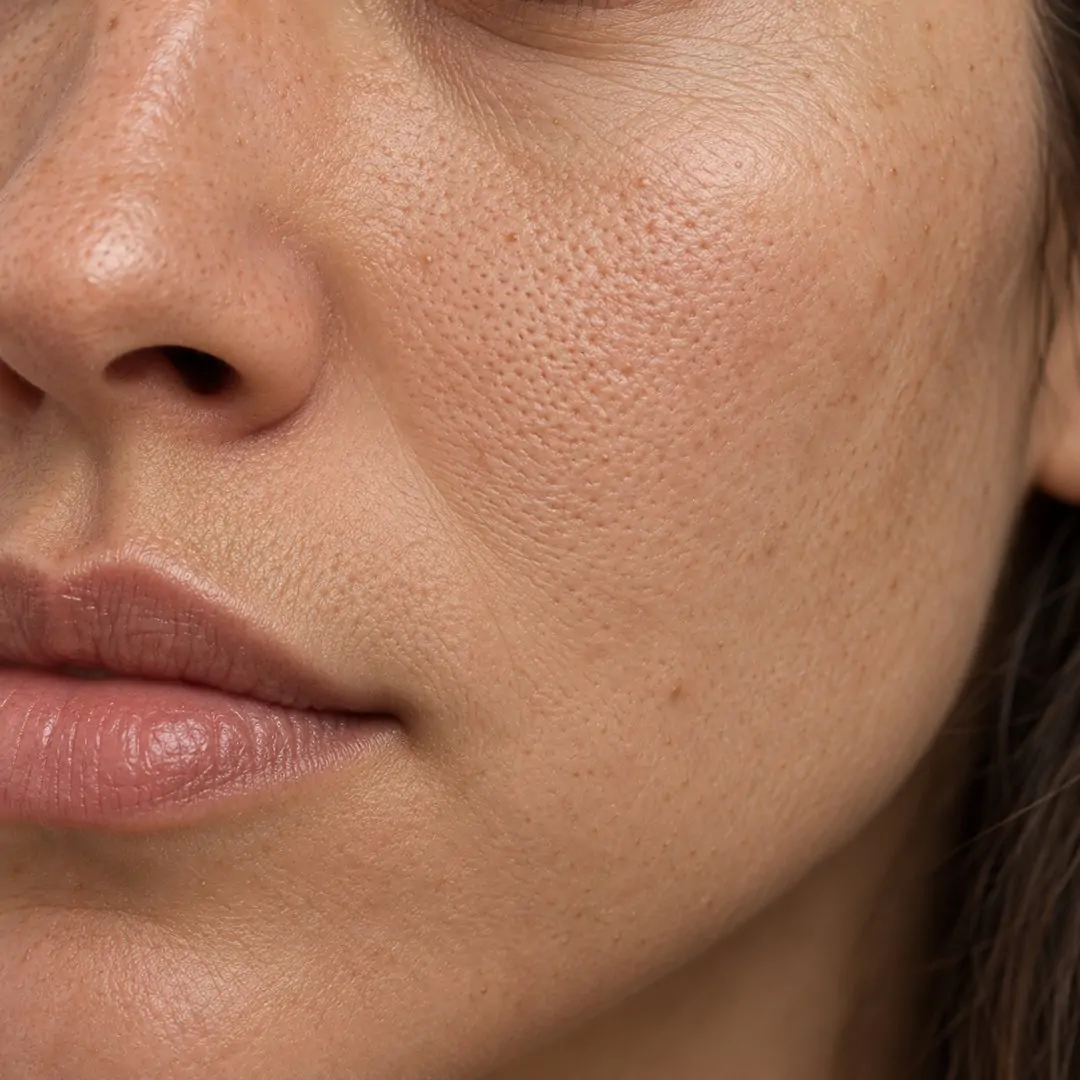
Uneven texture and enlarged pores: what’s the link?
Pores are a normal part of the skin’s structure and may naturally be more noticeable, particularly on the nose, forehead and cheeks.
Sebum production, build-up inside the follicle and individual characteristics can make them more visible, but the aim is not to ‘close’ them: pores are not openings that open and close.
However, when visible pores are accompanied by blackheads and an uneven skin surface, promoting the renewal of the stratum corneum can help to make the skin’s overall appearance more even.
How can I improve uneven skin texture on my face?
When the skin texture is uneven or accompanied by blackheads, microcysts or minor imperfections, MOST Skincare recommends a basic routine based on Micropeeling with Glicosal.
Glicosal is formulated with glycolic acid and salicylic acid. Their action promotes the gradual exfoliation of the stratum corneum, helping to smooth and refine the skin’s surface, reduce build-up and make blackheads and micro-imperfections less noticeable.
Use in the evening, once a day, by gently applying the product to the face with a cotton pad. After application, there is no need to apply any creams or other treatments on top: Glicosal is left to work on its own overnight.
The principle behind a skincare routine is to promote gradual and constant renewal, without overloading the skin with too many stimuli.

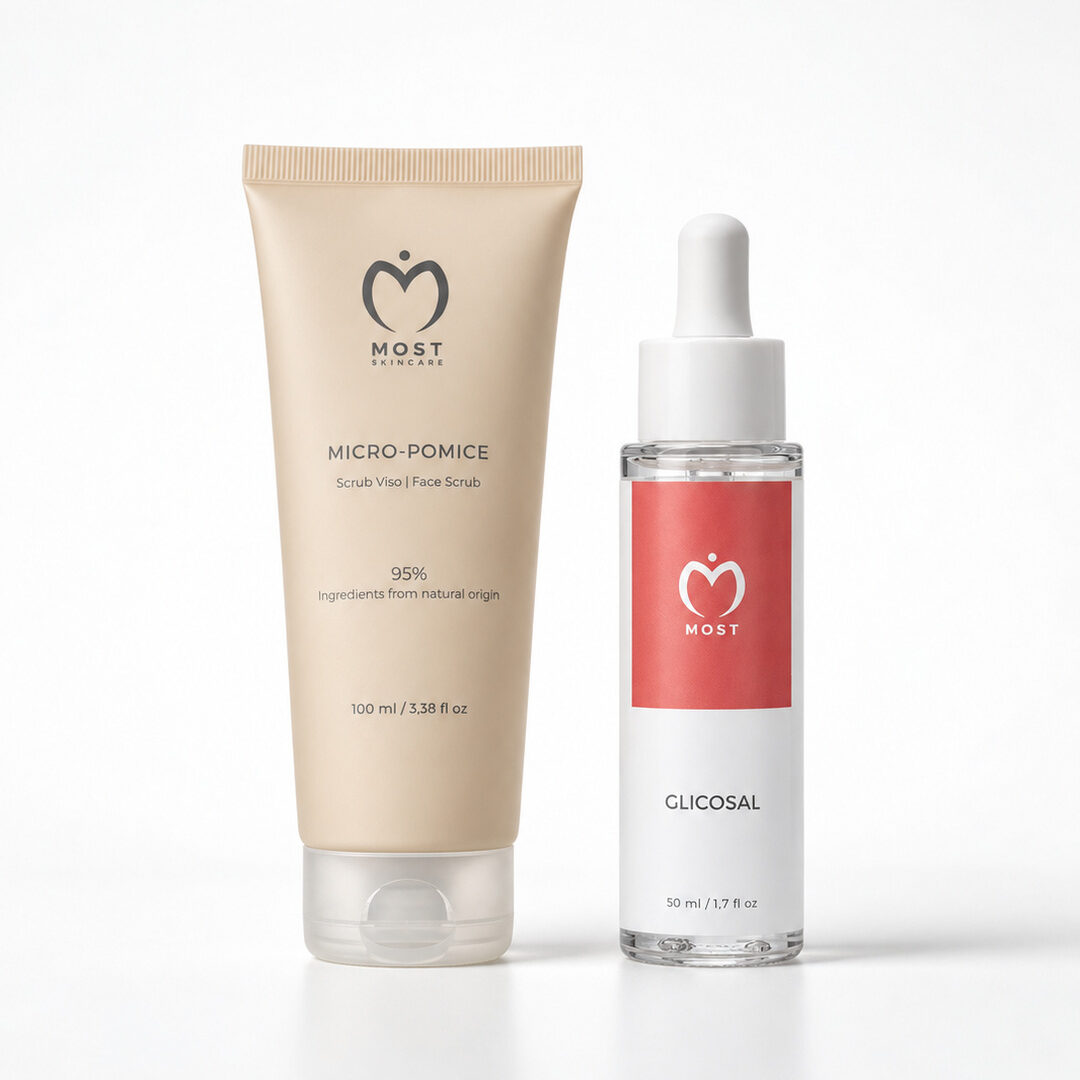
Facial exfoliation: how should Glicosal and Micro-Pumice be used together?
The daily use of Micropeeling can be combined with mechanical exfoliation of the skin’s surface using the Micro-Pumice Facial Scrub.
Micronised pumice helps to remove surface skin cells and smooth out the roughest areas, whilst succinic acid completes the action on the skin’s surface. The formula also contains shea butter, allantoin and vitamin E.
When Micro-Pumice is used in combination with Glicosal, MOST Skincare recommends using it 1–2 evenings a week in place of Glicosal: on evenings when you use the scrub, therefore, Glicosal should not be applied.
In this way, regular mechanical exfoliation is used alongside daily micropeeling, without carrying out both treatments on the same evening.
How should you cleanse a face with uneven skin texture?
In a skincare routine designed to address uneven skin texture, it is important to avoid overly harsh cleansing, particularly when exfoliating products are already being used.
Frequent washing and very strong degreasing cleansers can, in fact, alter the skin’s surface and increase the sensation of dryness and roughness.
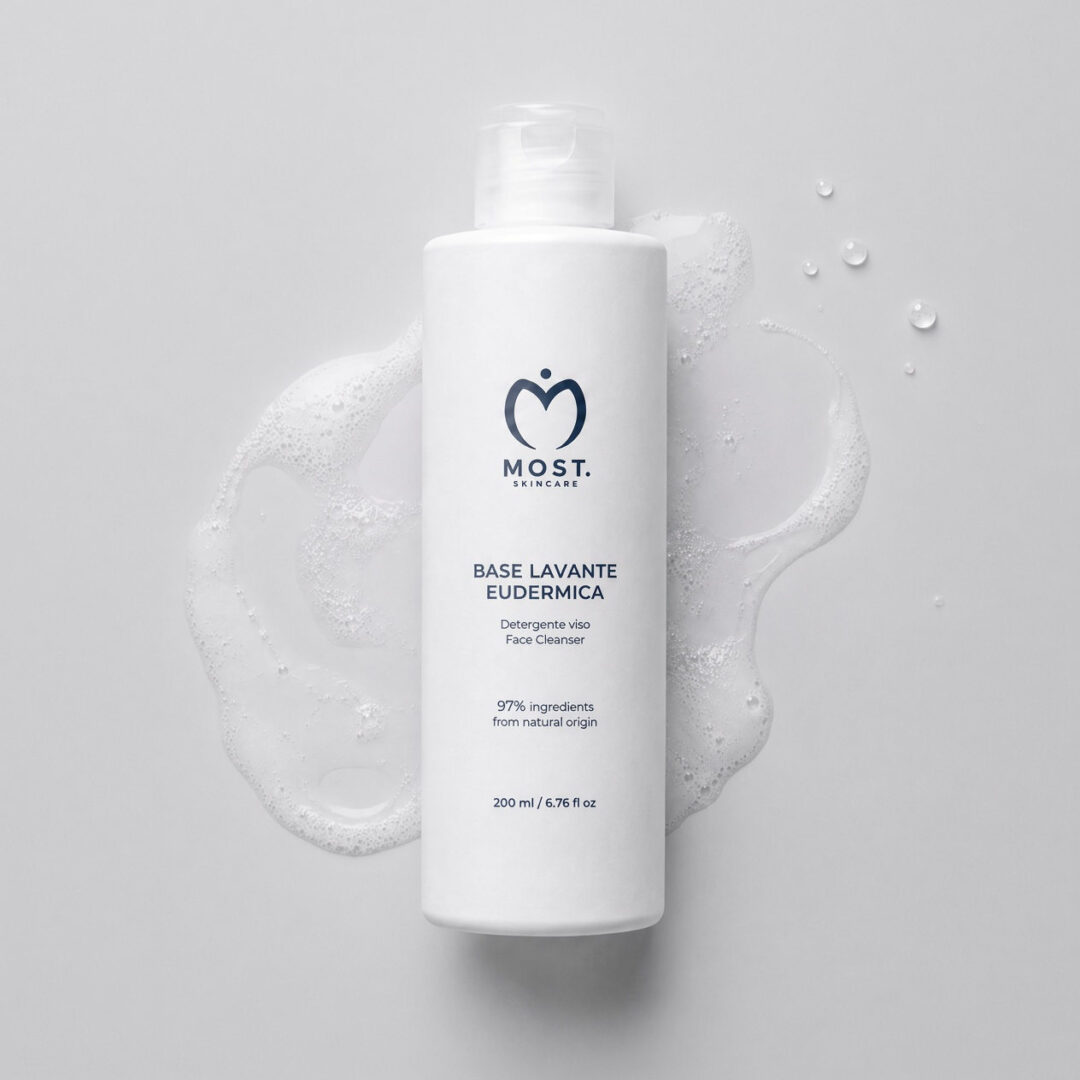
For daily cleansing, Eudermic Cleansing Base can be used; this is a non-foaming cleanser formulated with a low concentration of surfactants in an emollient base. It cleanses without excessively stripping the skin’s surface lipids and rinses off quickly.
The routine for uneven skin texture can therefore be kept simple: Eudermic Cleansing Base for cleansing, Glicosal every evening and Micro-Pumice 1–2 evenings a week instead of Glicosal.
Can a skincare product that’s too rich make your skin’s texture worse?
Yes, especially when it means constantly layering scrubs, acids, serums and various treatments on top of one another.
If your skin condition worsens, adding another product isn’t necessarily the answer. A simpler routine also helps you to better understand what your skin can tolerate and to avoid subjecting it to too many stimuli at once.
More exfoliation does not necessarily mean smoother skin.
How long does it take to see a more even complexion?
The texture does not change from one day to the next, as it follows the skin’s natural renewal process.
The improvement is gradual: as the routine is maintained, the surface may become smoother and the minor irregularities will gradually become less noticeable.
That is why it is more beneficial to stick to a few simple routines consistently rather than constantly switching products in the hope of achieving immediate results.
Genuine skin has a texture
Glowing skin isn’t the same as perfectly smooth skin.
Genuine skin retains its pores, texture, fine lines and natural surface variations. What changes is its overall appearance: it looks fresher, less dull and reflects light better.
That’s why you don’t necessarily need to add a product that promises a ‘glow’ effect.
It is more helpful to understand why your skin looks dull, choose the right level of exfoliation, maintain good hydration and avoid overloading your skincare routine.
Once the skin’s surface regains its smoothness and balance, a more radiant complexion naturally follows.